Ready to streamline healthcare?
Discover how our platform transforms operations. Book a free 30-min consultation to see it in action.

How Radiology Peer Review and Peer Learning Support Diagnostic Quality

Radiology quality programs need a reliable way to review interpretations, learn from difficult cases, and turn findings into practical improvements. Peer review and peer learning offer two related approaches.
Peer review generally evaluates agreement between an original interpretation and a later review. Peer learning uses cases, including discrepancies and strong diagnostic observations, as material for shared education and system improvement. A mature program may use elements of both.
The purpose is not to suggest that every difference in interpretation is an error. Imaging findings can be subtle, clinical information may change, and reasonable radiologists can sometimes reach different conclusions. A fair process examines the case, its context, its clinical significance, and what the organization can learn.
What is radiology peer review?
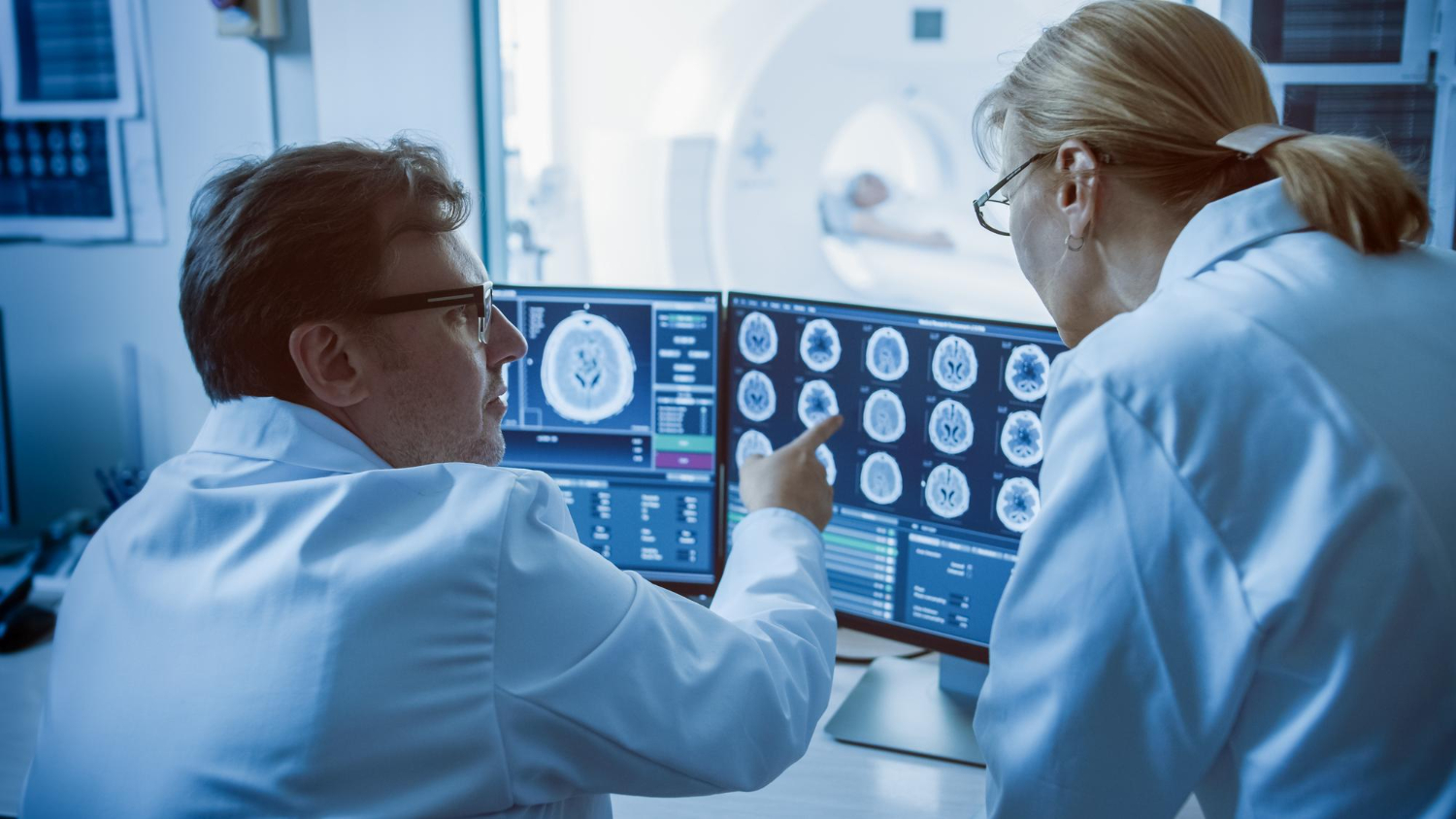
Radiology peer review is a structured evaluation of a radiologist’s prior interpretation by another qualified physician. It may occur during routine comparison with an earlier examination, through retrospective case selection, after clinician feedback, or as part of a focused quality review.
A traditional program may classify the level of agreement and the possible clinical significance of a discrepancy. It should also define what happens when a potentially significant concern is identified.
The American College of Radiology states that examinations should be systematically reviewed as part of a facility’s quality-improvement program. Its current physician quality-assurance guidance describes both score-based peer review and peer-learning pathways for eligible accreditation programs.
What is radiology peer learning?
Peer learning expands the focus from individual scoring to collective improvement. Cases are used to identify lessons, discuss diagnostic reasoning, recognize strong performance, and improve processes.
Peer-learning opportunities can include:
- A subtle finding that was difficult to recognize
- A meaningful discrepancy
- An especially helpful or well-communicated interpretation
- An unusual presentation
- A workflow problem that affected interpretation
- A reporting pattern that could be clarified
- A case that suggests a need for protocol or system improvement
The ACR describes peer learning as a process built around trust, constructive feedback, and a culture that minimizes blame. That does not mean significant concerns are ignored. It means the process is designed to encourage participation, careful analysis, and lasting improvement.
Peer review and peer learning are not interchangeable
The two approaches have different emphases.
Peer review is often used to measure agreement, identify discrepancies, maintain records, and satisfy defined quality-assurance requirements. Peer learning is more explicitly educational and may include positive cases as well as diagnostic or process concerns.
A practice can use both. For example, a review program might classify a discrepancy through a fair arbitration process, then use the de-identified learning point in a conference or educational resource.
The program’s terminology should be documented so participants understand whether a case is being scored, discussed for education, investigated as a safety event, or managed through another medical-staff process.
Elements of a credible program
A written policy
The policy should describe the program’s purpose, scope, leadership, case sources, confidentiality expectations, review process, participation targets, documentation, and relationship to quality improvement.
It should also explain which matters fall outside the ordinary peer-learning pathway. A routine learning case, a possible patient-safety event, a professionalism concern, and a credentialing matter may require different handling.
Representative and useful cases
A score-based program may use randomly selected cases that represent a physician’s actual practice. A peer-learning program may identify cases during routine work, conferences, event review, or clinician feedback.
The selection method affects what the data can mean. A group should not present a convenience sample of unusually difficult cases as if it were a statistical measure of overall accuracy.
Qualified review
The reviewer should have appropriate experience for the modality and subject matter. Subspecialty input may be useful for complex neuroradiology, musculoskeletal, body, pediatric, or other focused cases.
The review should include the images and information reasonably available to the original interpreting radiologist. Later pathology, surgery, follow-up imaging, or an expanded clinical history may clarify a diagnosis, but hindsight should be acknowledged.
A fair discrepancy process
A discrepancy process should define categories, potential clinical significance, notification, and arbitration. The original radiologist should have an appropriate opportunity to provide context or request further review.
Not every difference warrants the same response. The program should distinguish differences in style, reasonable differences in judgment, minor omissions, clinically important discrepancies, and workflow or communication failures.
Constructive feedback
Feedback should be timely enough to be useful and specific enough to support learning. A score without explanation may create defensiveness without improving practice.
Useful feedback can address:
- The relevant imaging feature
- The clinical context
- The potential significance
- A useful diagnostic approach
- Reporting or communication considerations
- Whether the case should be shared more broadly
A route from findings to improvement
Collecting cases is not the endpoint. The program should identify recurring themes and connect them to action.
Possible actions include:
- Case-based education
- Reporting-template changes
- Updates to hanging protocols
- Better access to prior studies
- Improvements in clinical-history capture
- Modality-specific education
- Changes to escalation or communication workflows
- A focused quality-improvement project
This step is where peer review becomes operationally meaningful.
The role of a just culture
A just culture recognizes that quality events can arise from individual decisions, system design, workload, communication, technology, or a combination of factors. It encourages reporting and learning while preserving accountability for conduct that falls outside professional expectations.
In radiology, this approach matters because fear of punishment can discourage physicians and staff from identifying near misses or sharing difficult cases. A learning culture needs psychological safety, but it also needs consistent rules, qualified leadership, and an appropriate pathway for serious concerns.
Peer review in a teleradiology environment
Remote interpretation changes where work occurs, but it does not remove the need for an integrated quality process. A teleradiology relationship should define how the provider and facility exchange feedback, evaluate concerns, and document follow-through.
Important questions include:
- How are cases identified for review?
- Who performs the review?
- How is clinical significance evaluated?
- Can the interpreting radiologist respond?
- How are urgent quality concerns escalated?
- How are trends reported to the facility?
- What information remains protected or confidential under applicable rules?
- How do findings lead to education or workflow changes?
The parties should also agree on a process for concerns raised by referring clinicians. Informal feedback can be valuable, but it should enter a consistent review pathway instead of being treated as a final quality determination.
Metrics that require context
Quality dashboards may include review volume, participation, agreement rates, discrepancy categories, modality trends, or completion of improvement work. These measures should not be interpreted in isolation.
A low number of submitted cases might reflect strong performance, low participation, or a reporting barrier. A higher number might reflect a healthy learning culture rather than poorer quality. Differences in case mix and review methodology also make comparisons difficult.
Leaders should ask what the metric measures, how cases were selected, and what action followed.
Transparent Imaging’s quality position
Transparent Imaging is radiologist-led and built by radiologists, for radiologists. Its network includes 200+ radiologists and is organized around subspecialty-focused, peer-reviewed, technology-enabled work.
This structure supports a central principle: quality review should involve physicians who understand the clinical work and can translate findings into education, feedback, and better processes. Flexible work for radiologists and reliable service for imaging centers and hospital systems should reinforce one another through clear expectations and accountability.
Frequently asked questions
What is the difference between peer review and quality assurance?
Peer review is one component of a broader quality-assurance program. Quality assurance may also include communication, turnaround, protocol, safety, technical, and operational measures.
Does every discrepancy mean the original report was incorrect?
No. Some differences reflect reasonable judgment, later information, reporting style, or an ambiguous finding. A qualified review should consider the full context and possible clinical significance.
Can positive cases be included in peer learning?
Yes. The ACR’s peer-learning framework allows cases involving strong observations, sometimes called great calls, as well as actual or potential performance issues.
Should peer learning be separated from performance evaluation?
Programs should follow applicable laws, medical-staff rules, accreditation requirements, and organizational policies. The ACR’s peer-learning pathway includes a commitment to separate peer-learning content from individual practitioner performance evaluation.
How can a hospital evaluate a teleradiology provider’s quality program?
Ask for the written process, reviewer qualifications, case sources, discrepancy and arbitration method, feedback workflow, trend reporting, and examples of how findings lead to improvement.
Build quality into the relationship
Peer review is most valuable when it creates learning and measurable follow-through. To discuss a radiologist-led, peer-reviewed coverage model, contact Transparent Imaging or learn more about the organization’s approach on the About page.